'Friendly' gut bacteria may eliminate pathogens by competing for energy resources
Click here to sign in with or
Forget Password?
Learn more
share this!
36
14
Share
May 13, 2022
'Friendly' gut bacteria may eliminate pathogens by competing for energy resources
by UC Davis
New research from scientists at UC Davis Health provides clues for how friendly bacteria in the gut—probiotics—may help eradicate bacterial pathogens like Salmonella by competing with them for needed resources.
The study, published today in Cell Host & Microbe, shows that the availability of needed nutrients alone doesn't define where bacteria—including pathogens like Salmonella—can survive and thrive in the gut.
"These insights provide a better understanding of the nutritional basis of intestinal colonization and can help inform efforts to develop probiotics to combat infection," said Megan Liou, a Ph.D. candidate in the Bäumler Lab at UC Davis and the first author of the study.
Humans are limited to using oxygen—the air we breathe—to generate energy. Microbes, though, have evolved energy mechanisms that can "breathe" different compounds and elements, such as nitrates. These mechanisms allow microbes to survive in many different environments.
In the study, the researchers looked at a friendly strain of bacteria, Escherichia coli strain Nissle 1917 (E. coli), and Salmonella, a harmful strain of bacteria that can cause gastrointestinal illness in humans and animals. (Some strains of E. Coli can cause illness, but most are harmless.)
Microbes use nitrate for energy
Nitrate is best known as a food preservative, but it is also an important resource for gut microbes. The nitrate from food sources is absorbed in the small intestine. Nitrate is also available in the gut as byproduct of everyday metabolic processes. It is typically at very low levels but increases during inflammation.
Both bacteria strains in the gut use nitrate for energy. But the researchers found that Salmonella can only use nitrate generated by phagocytes, a specific type of immune cells the body sends to repair wounded or infected tissues.
The E. coli uses nitrate generated by both gut cells—epithelial tissue—and phagocytes, meaning that it can compete with the Salmonella for its energy source.
Liou compared these different sources of nitrates to different "restaurants" where the microbes can obtain the resources they need to grow.
"The ability of E. coli Nissle to dine at 'restaurants' generated by phagocytes and compete with the pathogen for resources was essential for the probiotic to confer protection against Salmonella," Liou said.
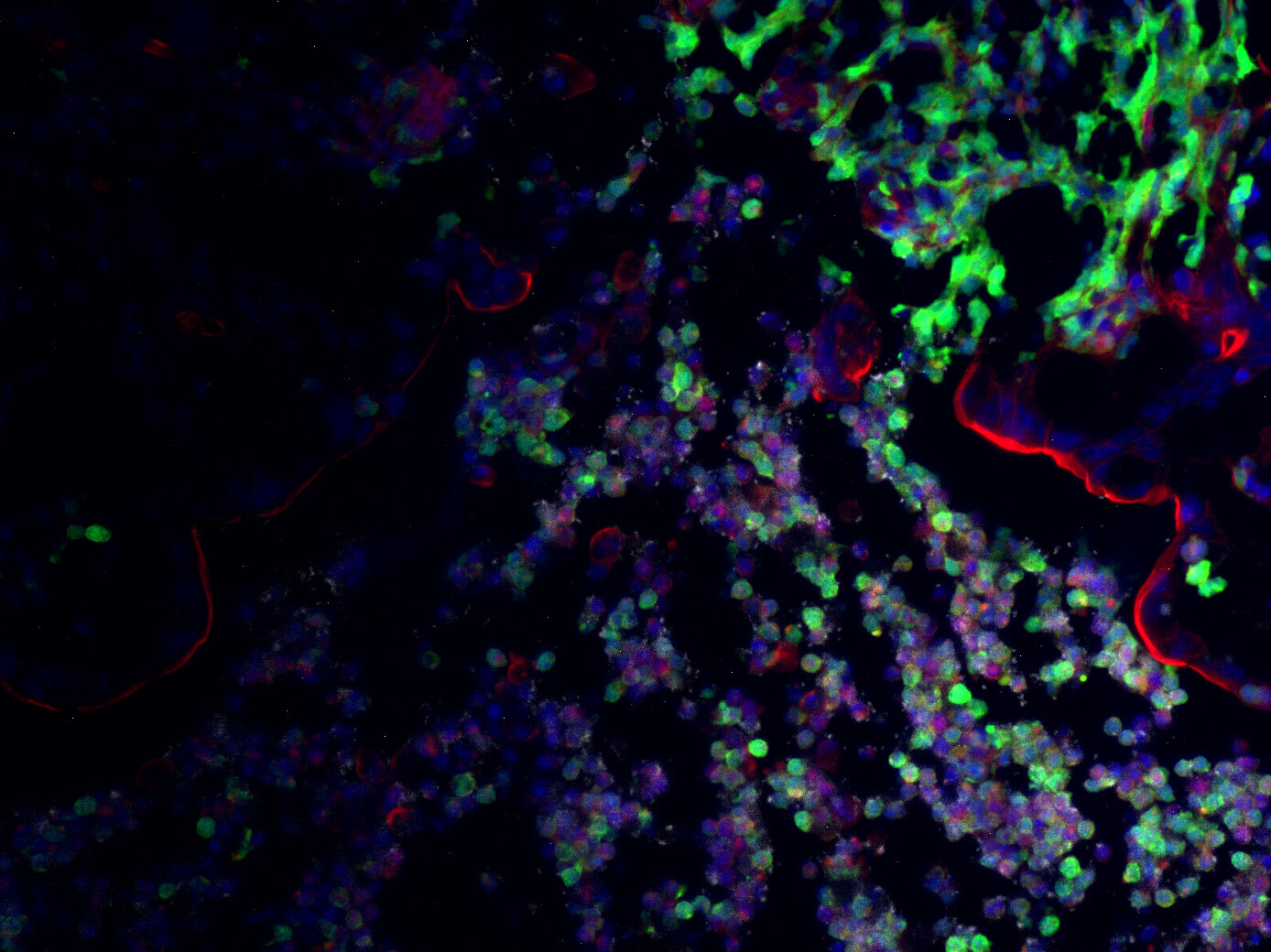
When the researchers infected mice with Salmonella, it triggered the expected inflammation in the gut, resulting in immune cells—phagocytes—being brought into the intestinal lumen, the layer that lines the intestines. Salmonella was able to find a niche in the lining of the intestines rich in phagocytes and exclusively used the nitrates generated by these immune cells.
Sensors limit where Salmonella can get resources in the gut
One puzzling aspect of the competition between the probiotic E. coli and the disease-inducing Salmonella was why the Salmonella did not utilize the nitrate produced by the healthy gut tissue. Why did it exclusively use nitrate produced by the immune-response tissue, limiting the number of places it could "dine"?
The researchers found the answer in the sensors of Salmonella that allow the bacteria to sniff out its surroundings and move toward a more favorable environment, known as chemotaxis receptors. They steered the pathogen away from the epithelial-derived nitrate and toward the inflammatory phagocyte cells.
Essentially, the Salmonella did not have a sensing mechanism that would steer it toward the healthy epithelial tissue, even though that tissue also created nitrates. The probiotic E. coli lacks chemotaxis receptors, which allows it to occupy both niches and compete against the pathogen in the latter's favored environment.
"By exploring the 'restaurants' inside your colon, our research identifies properties of probiotics that protect us from infection," said Andreas Bäumler, senior author of the study. Bäumler is vice-chair of research and a professor in the Department of Medical Microbiology and Immunology at the UC Davis School of Medicine. "These insights provide a better understanding of the nutritional basis of intestinal colonization and can help inform efforts to develop probiotics to combat infection."
Explore further
Feedback to editors
7 hours ago
0
8 hours ago
0
May 12, 2022
13
May 12, 2022
1
May 11, 2022
0
1 hour ago
1 hour ago
3 hours ago
3 hours ago
4 hours ago
4 hours ago
4 hours ago
Relevant PhysicsForums posts
32 minutes ago
36 minutes ago
37 minutes ago
42 minutes ago
45 minutes ago
47 minutes ago
More from Physics Forums | Science Articles, Homework Help, Discussion
May 26, 2021
May 10, 2022
Feb 09, 2022
Oct 05, 2021
Aug 10, 2017
May 02, 2016
Recommended for you
4 hours ago
6 hours ago
7 hours ago
22 hours ago
May 12, 2022
May 12, 2022
Use this form if you have come across a typo, inaccuracy or would like to send an edit request for the content on this page. For general inquiries, please use our contact form. For general feedback, use the public comments section below (please adhere to guidelines).
Please select the most appropriate category to facilitate processing of your request
Thank you for taking time to provide your feedback to the editors.
Your feedback is important to us. However, we do not guarantee individual replies due to the high volume of messages.
Your email address is used only to let the recipient know who sent the email. Neither your address nor the recipient's address will be used for any other purpose. The information you enter will appear in your e-mail message and is not retained by Phys.org in any form.
Get weekly and/or daily updates delivered to your inbox. You can unsubscribe at any time and we'll never share your details to third parties.
More information Privacy policy
Medical Xpress
Medical research advances and health news
Tech Xplore
The latest engineering, electronics and technology advances
Science X
The most comprehensive sci-tech news coverage on the web
Newsletters
This site uses cookies to assist with navigation, analyse your use of our services, collect data for ads personalisation and provide content from third parties. By using our site, you acknowledge that you have read and understand our Privacy Policy and Terms of Use.
Comments
Post a Comment